Well that got ugly quick. For the record, if you have been in the markets for any length of time you have seen this kind of action plenty of times. An index, or stock, or commodity or whatever, trends and trends and trend steadily and relentlessly higher over a period of time. And just when it seems like its going to last forever – BAM. It gives back all or much of its recent rally gains very quickly. Welcome to the exciting world of investing.
I make no claims of “calling the top” – because I never have actually (correctly) called one and I don’t expect that I ever will. But having written Part I and Part IIof articles titled “Please Take a Moment to Locate the Nearest Exit” in the last week, I was probably one of the least surprised people at what transpired in the stock market in the last few sessions.
Of course the question on everyone’s lips – as always in this type of panic or near panic situation – is, “where to from here?” And folks if I knew the answer, I swear I would tell you. But like everyone else, I can only assess the situation, formulate a plan of action – or inaction, as the case may be – and act accordingly. But some random thoughts:
*Long periods of relative calm followed by extreme drops are more often than not followed by periods of volatility. So, look for a sharp rebound for at least a few days followed by another downdraft and so on and so forth, until either:
a) The market bottoms out and resumes an uptrend
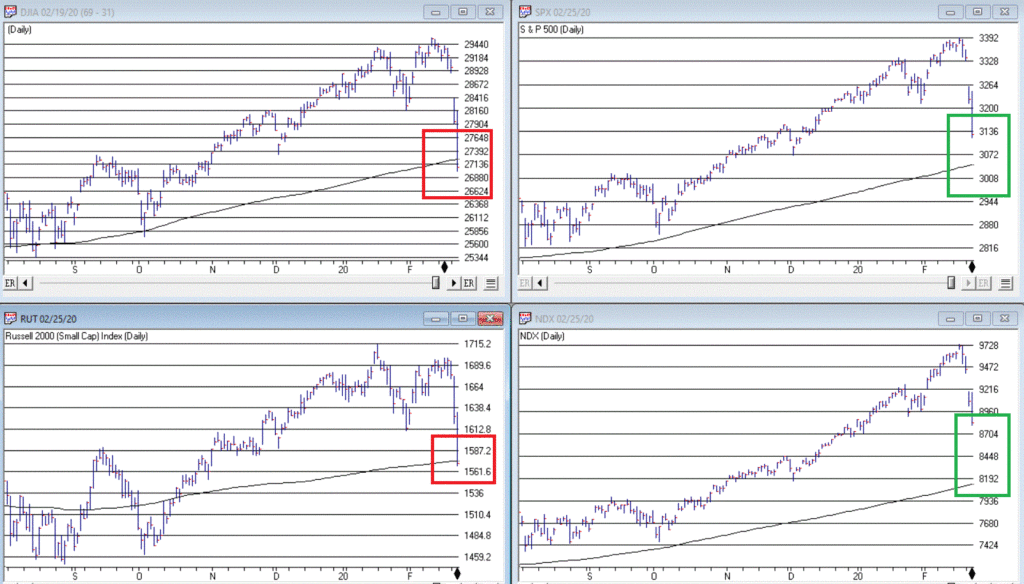
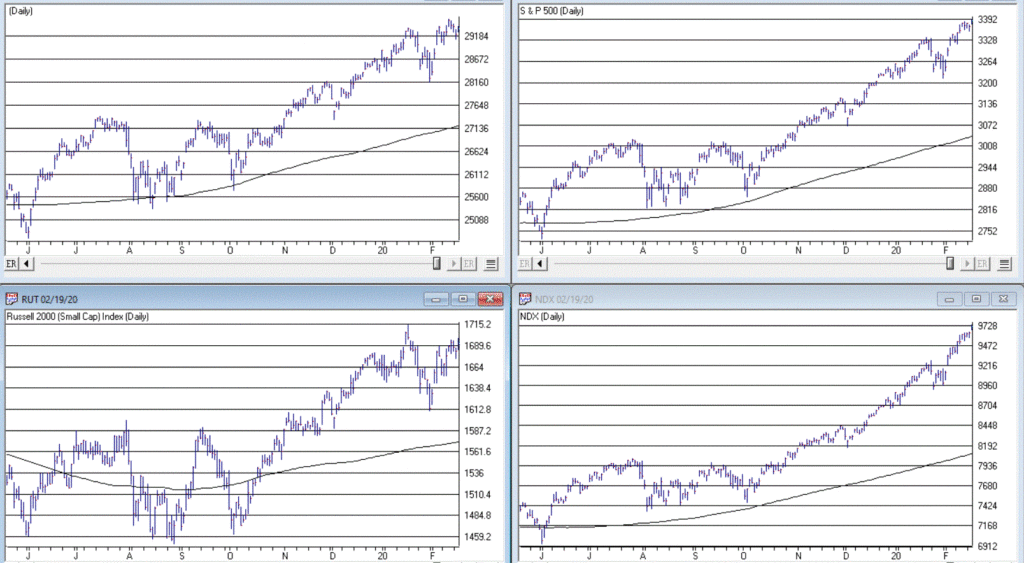
b) The major indexes (think Dow, S&P 500, Nasdaq 100, Russell 2000) drop below their 200-day moving averages. As of the close on 2/25 both the Dow and the Russell 2000 were below their 200-day moving average. That would set up another a) or b) scenario.
If the major indexes break below their long-term moving averages it will either:
a) End up being a whipsaw – i.e., the market reverses quickly to the upside
b) Or will be a sign of more serious trouble
The main point is that you should be paying close attention in the days and weeks ahead to the indexes in Figure 1.
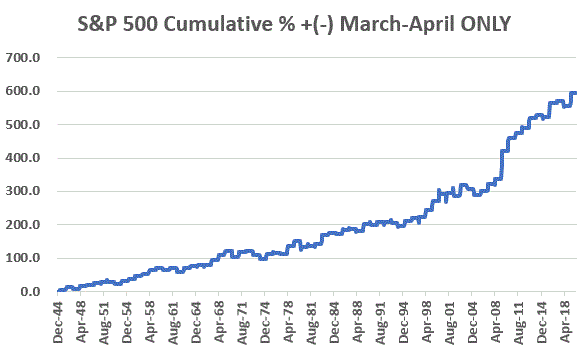
One reason for potential optimism is that the two-month period of March and April has historically been one of the more favorable two-month periods on an annual basis. Figure 2 displays the cumulative price gain achieved by the S&P 500 Index ONLY during March and April every year since 1945. The long-term trend is unmistakable, but year-to-year results can of course, vary greatly.
Figure 2 – S&P 500 cumulative price gain March-April ONLY (1945-2019)
For the record:
S&P 500 March-April
Result
Number of times UP
55 (73%)
Number of times DOWN
20 (27%)
Average UP%
+5.0%
Average DOWN%
(-3.4%)
Figure 3 – Facts and Figures
Will March and April bail us out? Here’s hoping.
As an aside, this strategy is having a great week so far.
Jay Kaeppel
Disclaimer: The information, opinions and ideas expressed herein are for informational and educational purposes only and are based on research conducted and presented solely by the author. The information presented does not represent the views of the author only and does not constitute a complete description of any investment service. In addition, nothing presented herein should be construed as investment advice, as an advertisement or offering of investment advisory services, or as an offer to sell or a solicitation to buy any security. The data presented herein were obtained from various third-party sources. While the data is believed to be reliable, no representation is made as to, and no responsibility, warranty or liability is accepted for the accuracy or completeness of such information. International investments are subject to additional risks such as currency fluctuations, political instability and the potential for illiquid markets. Past performance is no guarantee of future results. There is risk of loss in all trading. Back tested performance does not represent actual performance and should not be interpreted as an indication of such performance. Also, back tested performance results have certain inherent limitations and differs from actual performance because it is achieved with the benefit of hindsight.
To put this piece in context please refer to Part I here.
Part I detailed the Good News (the stock market is still very much in a bullish trend and may very well continue to be for some time) and touched on one piece of Bad News (the market is overvalued on a long-term valuation basis).
The Next Piece of Bad News: The “Early Lull”
In my book, Seasonal Stock Market Trends, I wrote about something called the Decennial Pattern, that highlights the action of the stock market in a “typical” decade.
The Four Parts of the “Typical Decade” are:
The Early Lull: Market often struggles in first 2.5 years of a decade
The Mid-Decade Rally: Market typically rallies in the middle of a decade – particularly between Oct 1 Year “4” and Mar 31 Year “6”
The 7-8 Decline: Market often experiences a sharp decline somewhere in the Year “7” to Year “8” period
The Late Rally: Market often rallies strongly into the end of the decade.
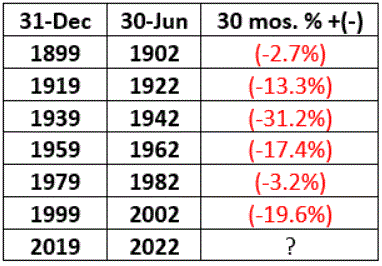
We are now in the “Early Lull” period. This in no way “guarantees” trouble in the stock market in the next two years. But it does offer a strong “suggestion”, particularly when we focus only on decades since 1900 that started with an Election Year (which is where we are now) – 1900, 1920, 1940, 1960, 1980, 2000.
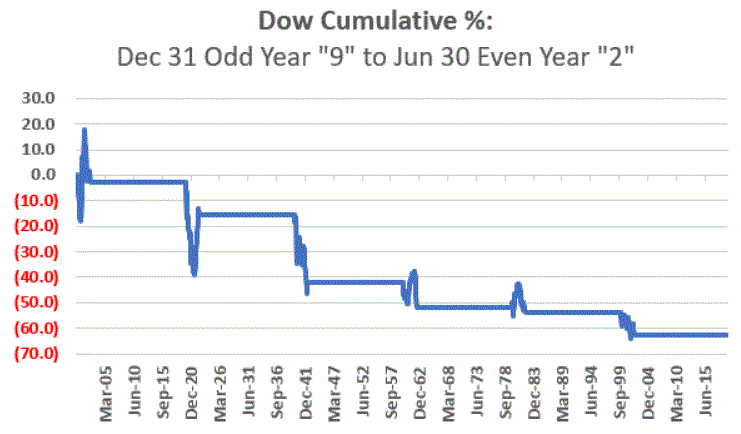
As you can see in Figures 5 and 6, each of these 6 2.5-year decade opening periods witnessed a market decline – -14% on average and -63% cumulative. Once again, no guarantee that 2020 into mid 2022 will show weakness, but….. the warning sign is there
Figure 5 – Dow price performance first 2.5 years of decades that open with a Presidential Election Year (1900-present)
Figure 6 – Cumulative Dow price performance first 2.5 years of decades that open with a Presidential Election Year (1900-present)
Summary
Repeating now: the trend of the stock market is presently “Up”.
Therefore:
*The most prudent thing to do today is to avoid all of the “news generated” worry and angst and enjoy the trend.
*The second most prudent thing to do is to acknowledge that this up trend will NOT last forever, and to prepare – at least mentally – for what you will do when that eventuality transpires, i.e., take a moment to locate the nearest exit.
Stay tuned for Part III
Jay Kaeppel
Disclaimer: The information, opinions and ideas expressed herein are for informational and educational purposes only and are based on research conducted and presented solely by the author. The information presented does not represent the views of the author only and does not constitute a complete description of any investment service. In addition, nothing presented herein should be construed as investment advice, as an advertisement or offering of investment advisory services, or as an offer to sell or a solicitation to buy any security. The data presented herein were obtained from various third-party sources. While the data is believed to be reliable, no representation is made as to, and no responsibility, warranty or liability is accepted for the accuracy or completeness of such information. International investments are subject to additional risks such as currency fluctuations, political instability and the potential for illiquid markets. Past performance is no guarantee of future results. There is risk of loss in all trading. Back tested performance does not represent actual performance and should not be interpreted as an indication of such performance. Also, back tested performance results have certain inherent limitations and differs from actual performance because it is achieved with the benefit of hindsight.
Well that sounds like a pretty alarming headline, doesn’t it? But before you actually take a moment to locate the nearest exit please note the important difference between the words “Please locate the nearest exit” and “Oh My God, it’s the top, sell everything!!!”
You see the difference, right? Good. Let’s continue. First, a true confession – I am not all that great at “market timing”, i.e., consistently buying at the bottom and/or selling at the top (I console myself with the knowledge that neither is anyone else). On the other hand, I am reasonably good at identifying trends and at recognizing risk. Fortunately, as it turns out, this can be a pretty useful skill.
So, while I may not be good at market timing, I can still make certain reasonable predictions. Like for example, “at some point this bull market will run out of steam and now is as good a time as any to start making plans about how one will deal with this inevitable eventuality – whenever it may come”. (Again, please notice the crucial difference between that sentence and “Oh My God, it’s the top, sell everything!!”)
First the Good News
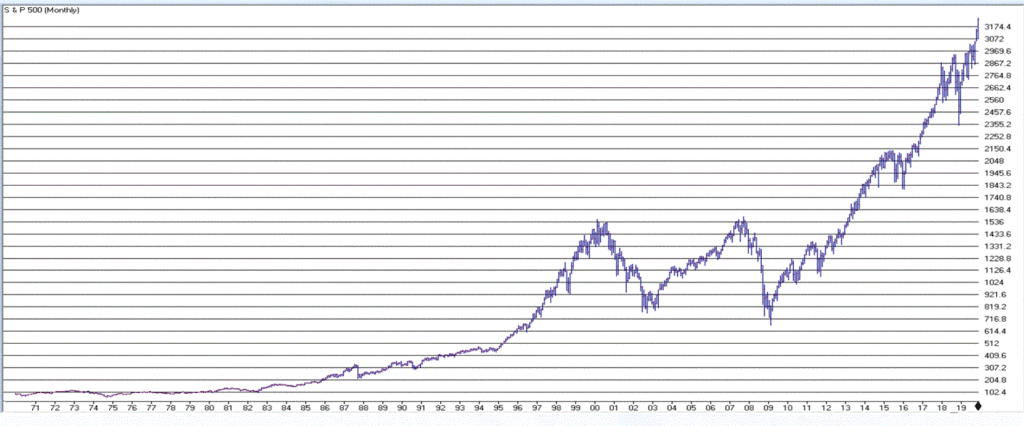
The trend in the stock market is bullish. Duh. Is anyone surprised by that statement? Again, we are talking subtleties here. We are not talking about predictions, forecasts, projected scenarios, implications of current action for the future, etc. We are just talking about pure trend-following and looking at the market as it is today. Figure 1 displays the S&P 500 Index monthly since 1971 and Figure 2 displays four major indexes (Dow, S&P 500, Nasdaq 100, Russell 2000) versus their respective 200-day moving averages.
It is impossible to look at the current status of “things” displayed in Figures 1 and 2 and state “we are in a bear market”. The trend – at the moment – is “Up”. The truth is that in the long run many investors would benefit from ignoring all of the day to day “predictions, forecasts, projected scenarios, implications of current action for the future, etc.” that emanates from financial news and just sticking to the rudimentary analysis just applied to Figures 1 and 2.
In short, stop worrying and learn to love the trend. Still, no trend lasts forever, which is kind of the point of this article.
So now let’s talk about the “Bad News”. But before we do, I want to point out the following: the time to actually worry and/or do something regarding the Bad News will be when the price action in Figure 2 changes for the worse. Let me spell it out as clearly and as realistically as possible.
If (or should I say when?) the major U.S. stock indexes break below their respective 200-day moving averages (and especially if those moving average start to roll over and trend down):
*It could be a whipsaw that will be followed by another rally (sorry folks, but for the record I did mention that I am not that good at market timing and that I was going to speak as realistically as possible – and a whipsaw is always a realistic possibility when it comes to trend-following)
*It could be the beginning of a significant decline in the stock market (think -30% or possibly even much more)
So, the proper response to reading the impending discussion of the Bad News is not “I should do something”. The proper response is “I need to resolve myself to doing something when the time comes that something truly needs to be done.”
You see the difference, right? Good. Let’s continue.
The Bad News
The first piece of Bad News is that stocks are overvalued. Now that fact hardly scares anybody anymore – which actually is understandable since the stock market has technically been overvalued for some time now AND has not been officially “undervalued” since the early 1980’s. Also, valuation is NOT a timing tool, only a perspective tool. So high valuation levels a re pretty easy to ignore at this point.
Still, here is some “perspective” to consider:
*Recession => Economic equivalent of jumping out the window
*P/E Ratio => What floor you are on at the time you jump
Therefore:
*A high P/E ratio DOES NOT tell you WHEN a bear market will occur
*A high P/E ratio DOES WARN you that when the next bear market does occur it will be one of the painful kind (i.e., don’t say you were not warned)
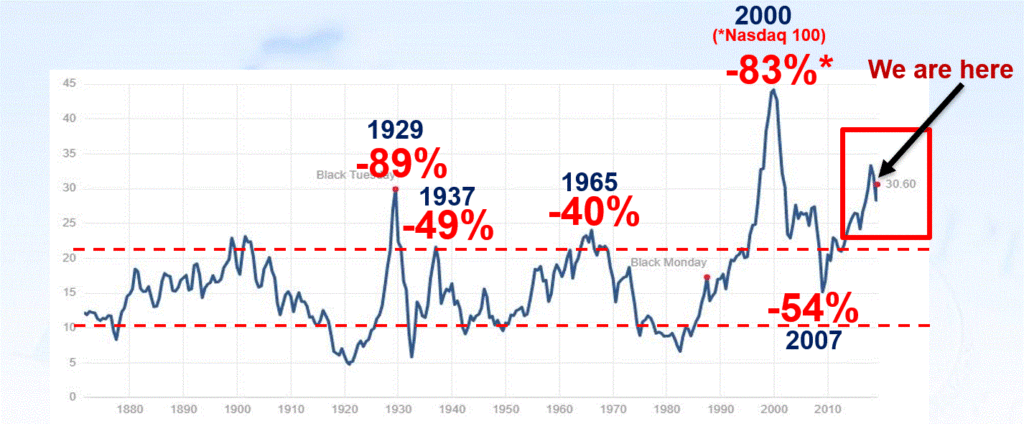
Figure 3 displays the Shiller P/E Ratio plus (in red numbers) the magnitude of the bear market that followed important peaks in the Shiller P/E Ratio.
Repeating now: Figure 3 does not tell us that a bear market is imminent. It does however, strongly suggest that whenever the next bear market does unfold, it will be, ahem, significant in nature. To drive this point home, a brief history:
1929: P/E peak followed by -89% Dow decline in 3 years
1937: P/E peak followed by -49% Dow decline in 7 months(!?)
1965: P/E peak followed by 17 years of sideways price action with a -40% Dow decline along the way
2000: P/E peak followed by -83% Nasdaq 100 decline in 2 years
2007: P/E peak followed by -54% Dow decline in 17 months
Following next peak: ??
As you can see, history suggests that the next bear market – whenever it may come – will quite likely be severe. There is actually another associated problem to consider. Drawdowns are one thing – some investors are resolved to never try to time anything and are thus resigned to the fact that they will have to “ride ‘em out” once in awhile. OK fine – strap yourself in and, um, enjoy the ride. But another problem associated with high valuation levels is the potential (likelihood?) for going an exceedingly long period of time without making any money at all. Most investors have pretty much forgotten – or have never experienced – what this is like.
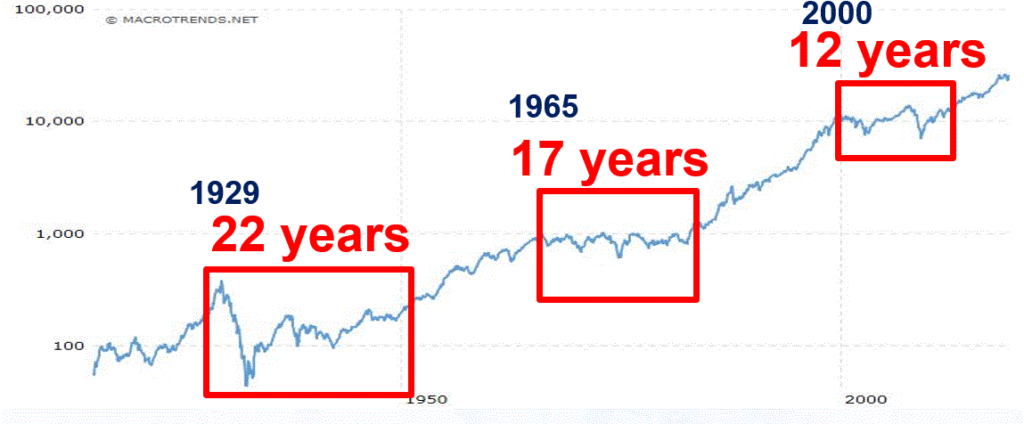
Figure 4 displays three such historical periods – the first associated with the 1929 peak, the second with the 1965 peak and the third with the 2000 peak.
Figure 4 – Long sideways periods often follow high P/E ratios
*From 1927 to 1949: the stock market went sideways for 22 years. Some random guy in 1947 – “Hey Honey, remember that money we put to work in the stock market back in 1927? Great News! We’re back to breakeven! (I can’t speak for anyone else, but personally I would prefer to avoid having THAT conversation.)
*From 1965 to 1982: the stock market went sideways. While this is technically a 0% return over 17 years (with drawdows of -20%, -30% and -40% interspersed along the way – just to make it less boring), it was actually worse than that. Because of high inflation during this period, purchasing power declined a fairly shocking -75%. So that money you “put to work” in that S&P 500 Index fund in 1965, 17 years later had only 25% as much purchasing power (but hey, this couldn’t possibly happen again, right!?).
*From 2000 to 2012: the stock market went sideways. With the market presently at much higher all-time highs most investors have forgotten all about this. Still, it is interesting to note that from 8/31/2000 through 1/31/2020 (19 years and 5 months), the average annual compounded total return for the Vanguard S&P 500 Index fund (ticker VFINX) was just +5.75%. Not exactly a stellar rate of return for almost 20 years of a “ride ’em out” in an S&P 500 Index fund approach).
The Point: When valuations are high, future long-term returns tend to be subpar – and YES, valuations are currently high.
You have been warned.
Stay tuned for Part II…
Jay Kaeppel
Disclaimer: The information, opinions and ideas expressed herein are for informational and educational purposes only and are based on research conducted and presented solely by the author. The information presented does not represent the views of the author only and does not constitute a complete description of any investment service. In addition, nothing presented herein should be construed as investment advice, as an advertisement or offering of investment advisory services, or as an offer to sell or a solicitation to buy any security. The data presented herein were obtained from various third-party sources. While the data is believed to be reliable, no representation is made as to, and no responsibility, warranty or liability is accepted for the accuracy or completeness of such information. International investments are subject to additional risks such as currency fluctuations, political instability and the potential for illiquid markets. Past performance is no guarantee of future results. There is risk of loss in all trading. Back tested performance does not represent actual performance and should not be interpreted as an indication of such performance. Also, back tested performance results have certain inherent limitations and differs from actual performance because it is achieved with the benefit of hindsight.
OK, so this particular piece clearly does NOT qualify as “timely”. Hey, they can’t all be “time critical, table-pounding, you must act now” missives. In any event, as part of a larger project regarding trends and seasonality in the market, I figured something out – we “quantitative analyst types” refer to this as “progress.”
So here goes.
The Month of October in the Stock Market
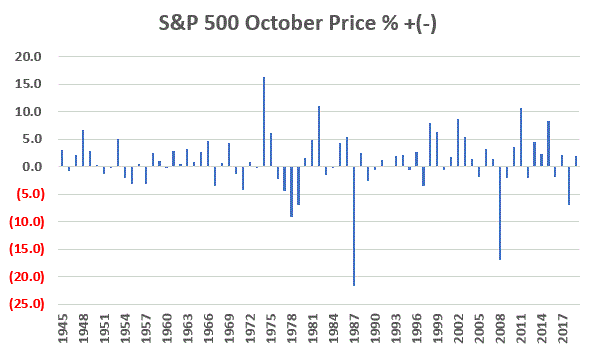
The month of October in the stock market is something of a paradox. Many investors refer to it as “Crash Month” – which is understandable given the action in 1929, 1978, 1979, 1987, 1997, 2008 and 2018. Yet others refer to it as the “Bear Killer” month since a number of bear market declines have bottomed out and/r reversed during October. Further complicating matters is that October has showed:
*A gain 61% of the time
*An average monthly gain of +0.95%
*A median monthly gain of +1.18%
Figure 1 displays the monthly price return for the S&P 500 Index during every October starting in 1945.
Figure 1 – S&P 500 Index October Monthly % +(-)
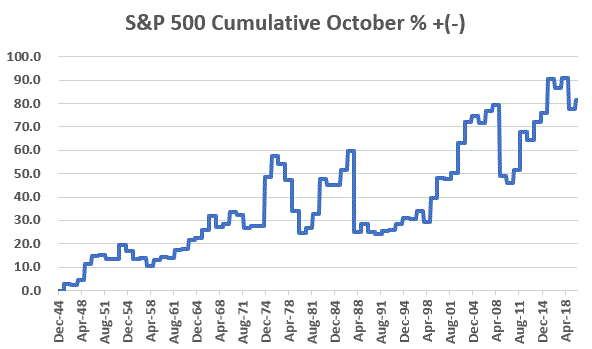
Figure 2 displays the cumulative % price gain achieved by holding the S&P 500 Index ONLY during the month of October every year starting in 1945.
Figure 2 – S&P 500 Index Cumulative October % +(-)
So, you see the paradox. To simply sit out the market every October means giving up a fair amount of return over time (not to mention the logistical and tax implications of “selling everything” on Sep 30 and buying back in on Oct 31). At the same time, October can be a helluva scary place to be from time to time.
One Possible Solution – The Decennial Pattern
In my book “Seasonal Stock Market Trends” I have a section that talks about the action of the stock market across the average decade. The first year (ex., 2010) is Year “0”, the second year (ex., 2011) is Year “1”, etc.
In a nutshell, there tends to be:
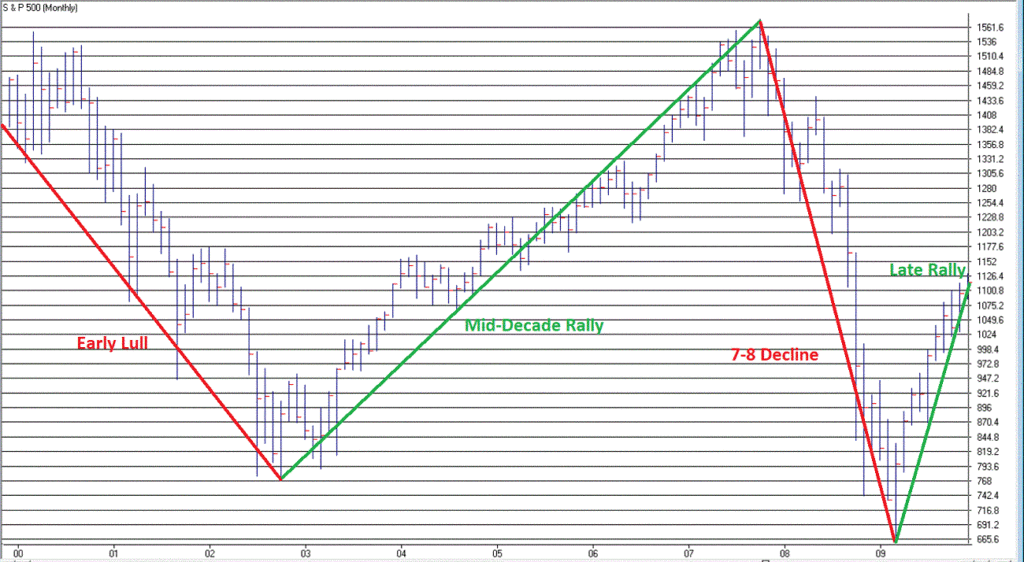
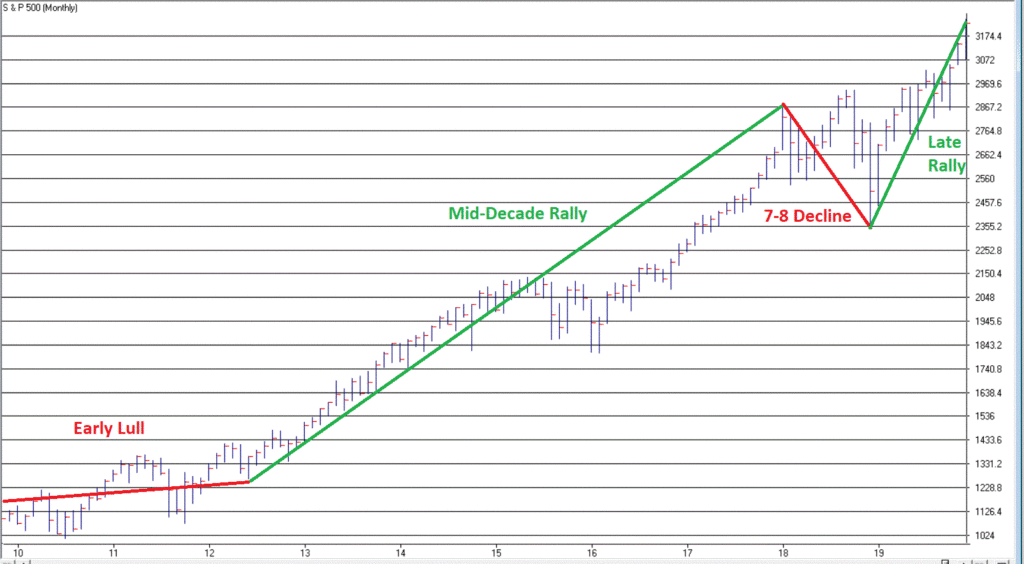
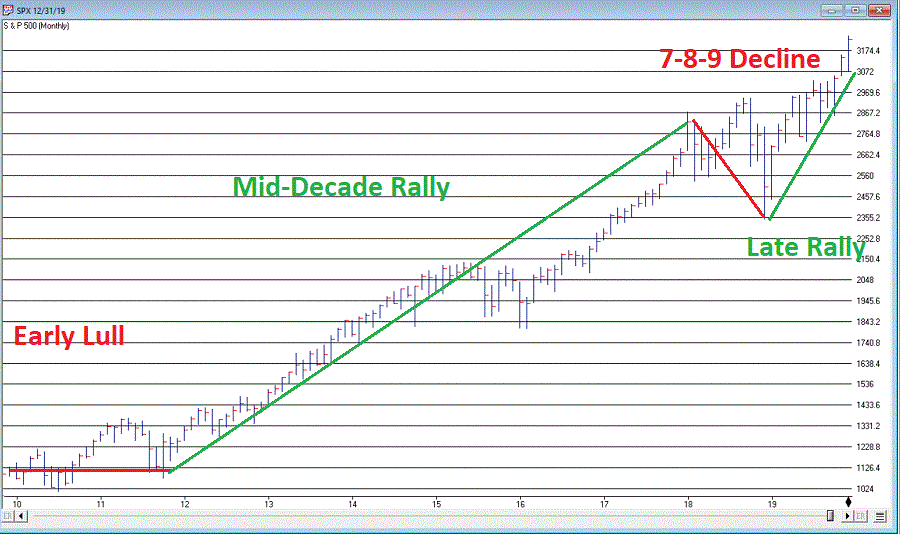
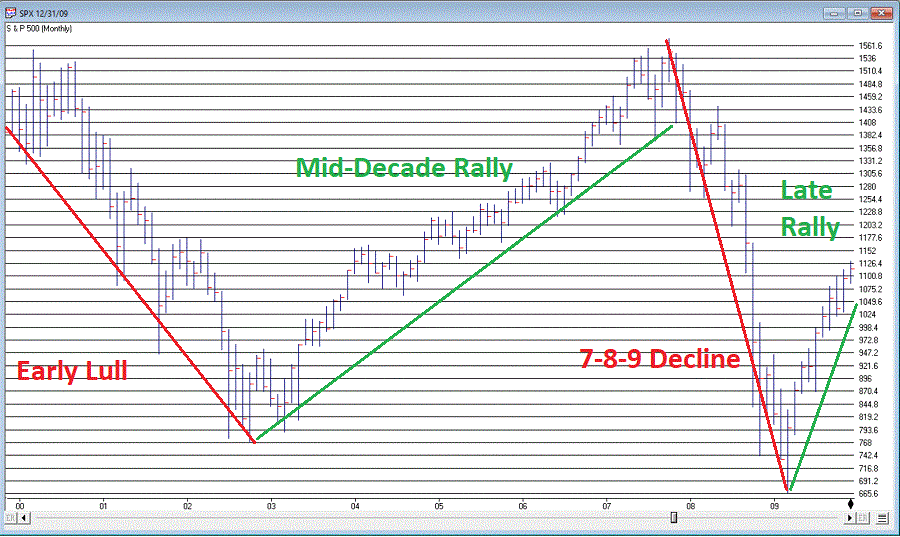
The Early Lull: Often there is weakness starting in Year “0” into mid Year “2”
The Mid-Decade Rally: Particularly strong during late Year “4” into early Year “6”
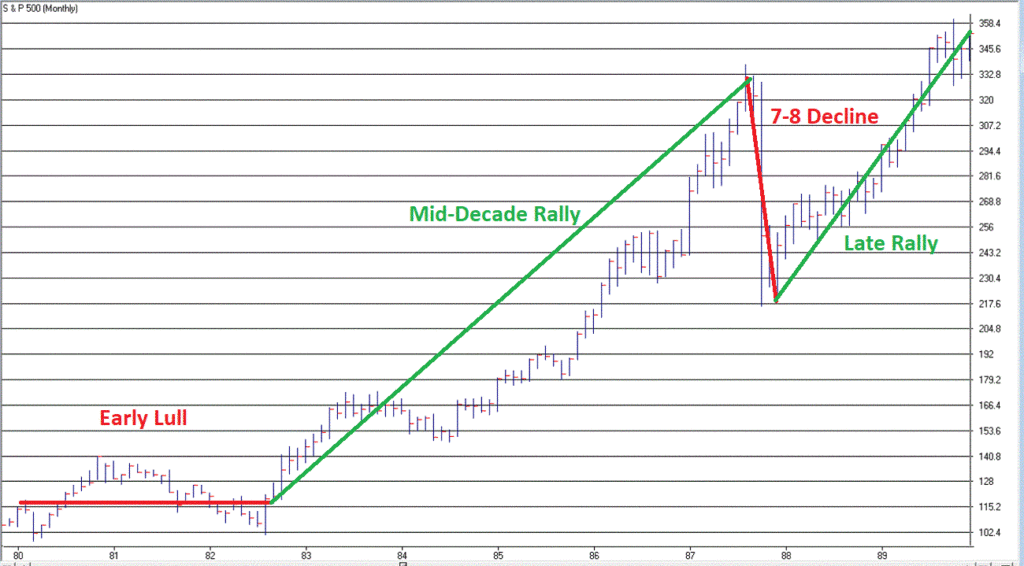
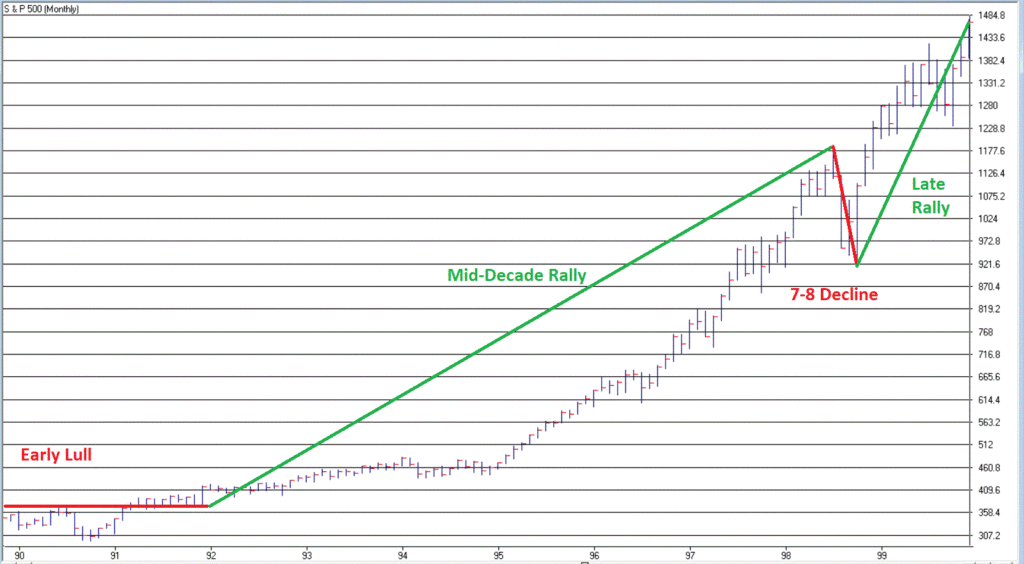
The 7-8-9 Decline: Often there is a significant pullback somewhere in the during Years “7” or “8” or “9”
The Late Rally: Decades often end with great strength
Figures 3 and 4 display this pattern over the past two decades.
(Charts courtesy of WinWayCharts)
Figure 3 – Decennial Pattern: 2010-2019
(Charts courtesy of WinWayCharts)
Figure 4 – Decennial Pattern: 2000-2009
Focusing on October
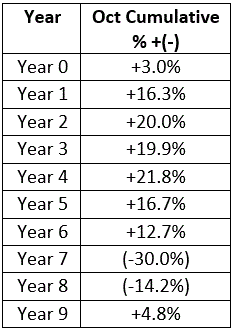
So now let’s look at October performance based on the Year of the Decade. The results appear in Figure 5. To be clear, Year 0 cumulates the October % +(-) for the S&P 500 Index during 1950, 1960, 1970, etc. Year 9 cumulates the October % +(-) for the S&P 500 index during 1949, 1959, 1969, 1979, etc.
Figure 5 – October S&P 500 Index cumulative % +(-) by Year of Decade
What we see is that – apparently – much of the “7-8-9 Decline” takes place in October, as Years “7” and “8” of the decade are the only ones that show a net loss for October.
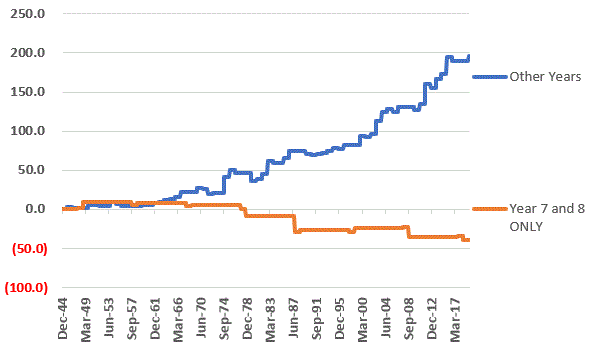
Let’s highlight this another way. Figure 6 displays the cumulative % return for the S&P 500 Index during October during all years EXCEPT those ending “7” or “8” versus the cumulative % return for the S&P 500 Index during October during ONLY years ending in “7” or “8”.
Figure 6 – S&P 500 cumulative October % +(-); Years 7 and 8 of decade versus All Other Years of Decade
For the record:
*October during Years “7” and “8” lost -39%
*October during all other Years gained +196%
Summary
So, does this mean that October is now “green-lighted” as bullish until 2027? Not necessarily. As always, that pesky “past performance is no guarantee of future results” phrase looms large.
But for an investor looking to maximize long-term profits while also attempting to avoid potential pain along the way, the October 7-8 pattern is something to file away for future reference.
Jay Kaeppel
Disclaimer: The information, opinions and ideas expressed herein are for informational and educational purposes only and are based on research conducted and presented solely by the author. The information presented does not represent the views of the author only and does not constitute a complete description of any investment service. In addition, nothing presented herein should be construed as investment advice, as an advertisement or offering of investment advisory services, or as an offer to sell or a solicitation to buy any security. The data presented herein were obtained from various third-party sources. While the data is believed to be reliable, no representation is made as to, and no responsibility, warranty or liability is accepted for the accuracy or completeness of such information. International investments are subject to additional risks such as currency fluctuations, political instability and the potential for illiquid markets. Past performance is no guarantee of future results. There is risk of loss in all trading. Back tested performance does not represent actual performance and should not be interpreted as an indication of such performance. Also, back tested performance results have certain inherent limitations and differs from actual performance because it is achieved with the benefit of hindsight.
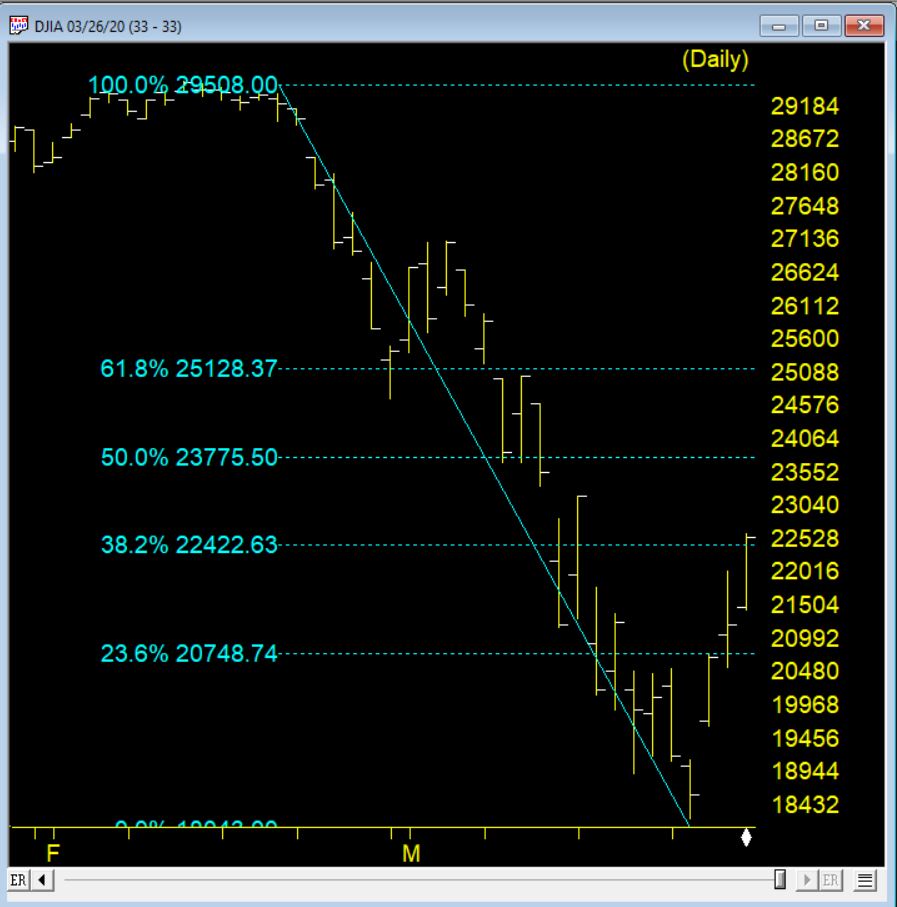
3-26-20 saw the market on the third day of a rebound from the low of 18213 on 3-23-20. The chart below shows the Fibonacci retracements from the recent high to this low. Since that time prices have been a narrow range for this volatile market
The retracement hit the 38.2% level and this level can offer resistance. The market is down again and could be we are headed down to retest at or near the last low.
If we rally passes the 38.2% the next resistance level will be at 23775 or so at the 50% retracement level.
Market Timing signals
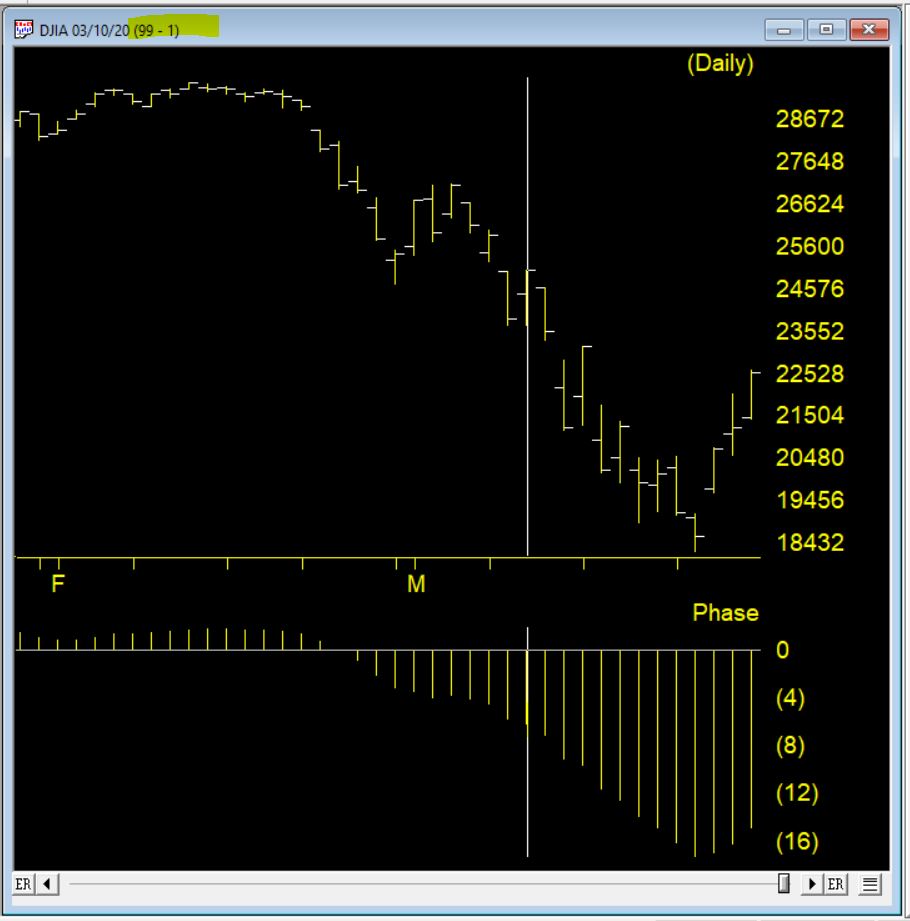
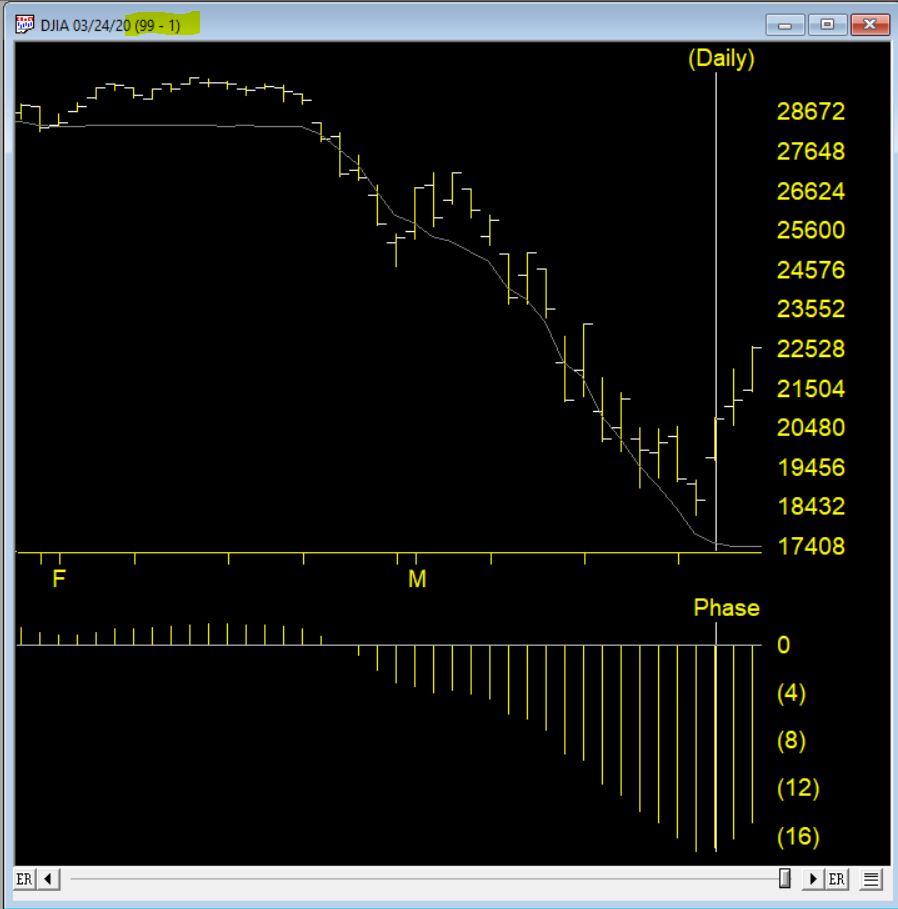
The Market Timing system issued a 99-1 up signal on 3-10-20, the chart below shows the signal. The Phase indicator changing direction in the direction of the signal (moving down then moves up) provides confirmation market Timing signals. IN this case that didn’t happen.
Another up signal 99-1 fired on 3-24-20 and this time the phase turned up the same day and confirmed the signal.
Here are 3 of the bullish rules that fired to create this high up signal
The 21 day stochastic has advanced and crossed the 20% line and the price phase indicator is also increasing. In this weakly downtrending market this is taken as a strong bullish signal suggesting an increase in prices.
Volume accumulation percentage is increasing and the 21 day stochastic has moved above the 20% line. In this downtrending market, this is taken as a strong bullish signal that could be followed by an upward price movement.
The price phase indicator is negative but volume accumulation has started to advance. This is a non-conformation that, regardless of the type of market, is a bullish signal which usually results in an upward movement of the market.
The counter trend AI system that generates these signals can be early in their firing. While the market moved up 2000 a nice move in most markets, in prior trading environments this would have taken a number of weeks, in our current volatility the market moved from the up signal in 2 days.

 English